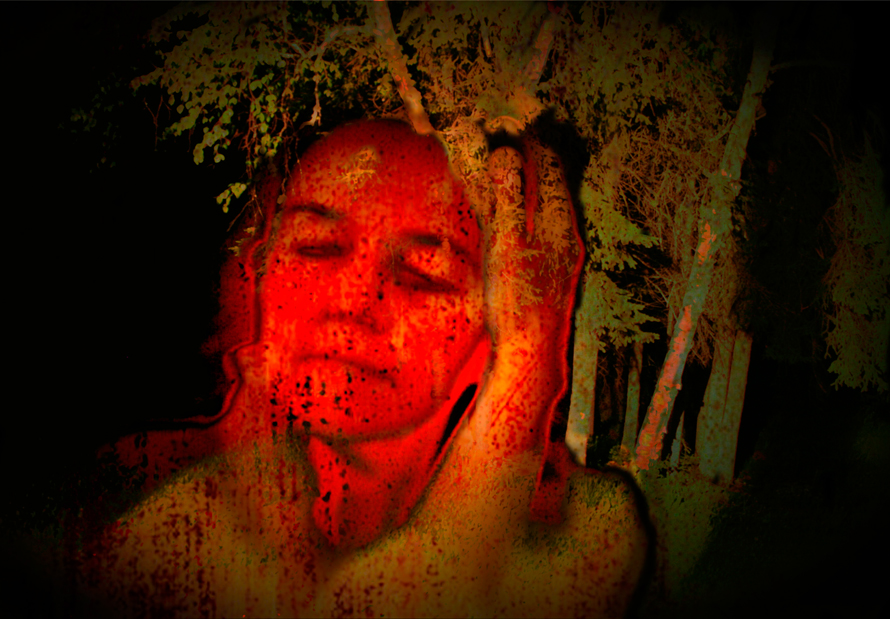
Book of skins


More and more, I'm liking the square format.

Pyro nymph


Musing


Drifter


Red muse


Fauve


from the Cosmochromes series

Chrysalis emerging


Skin on skin


Paper-thin layers of white birch caressing an imprinted body.

Moving on


When I let go of what I am, I become what I might be.
(Lao Tzu)


Sandbar


In good company.

peeling silks video poem

koto strings video poem


Taipei night market mannequin

I saw this interesting Western mannequin at the Taipei night market with her skin covered in Chinese ideograms.

Percolating


Haiku sketch 2


Haiku drawing


More on tags

Below is an example of a grunged print, the original being 38" x 58" @ 360 ppi. The custom tag could be placed on the lower right corner and would be the perfect size to scan with the phone. Here, I have kept the default dot colours (CMYK).


A rendered tag with custom background and default colour tag dots. It could in itself be a 10" x 10" or larger print.


The encoded text is the Lexicon of skins and decay, posted on one of my other blogs, liminal skins:
Skins or layers show transparencies and porosities, as well as change and transformation. Decay can also take on many of these characteristics—especially when associated with aging.
Here are the beginnings of a lexicon of skins, change and decay that can be used to help describe what my photo composites might evoke:
blistered • wrinkled • pleated • fringed • feathered • decayed • peeled • ravaged • distressed • decomposed • degenerated • destroyed • deteriorated • dying • changed • renewed • reborn • transformed • surfacing • skin • pellicle • flesh • encounters • interrelated • intertwined • co-responsive • intercalated • folds • layers • crossovers • interminglings • (in)visible • transparencies • translucency • superimposed • porosities • veils • strata • resonance • (inter)connectedness • liminality • intercorporeity

Interactive barcodes and tags

Recently, I've been exploring those interesting square tags that appear in magazines, on posters, even on people (as tattoos and T-shirts). The fact that they are encoded with information that is only revealed through scanning with a smartphone or other smart device is intriguing... a secret code where one can interact with the viewer. These "barcodes" (though they do not resemble the ubiquitous codes with bars) are referred to as QR ("Quick Response") barcodes. Initially developed in Japan. I can remember seeing them everywhere in Tokyo a few years ago: in books, pamphlets, posters, for instance, whereas they were not yet present in North America.

A QR barcode can be of any size (even a billboard) and it initiates an action once scanned by the phone (iPhone or Android). It can indicate a location on a Google map, activate your email client to send an email, initiate a phone call, bring you to a specific URL that contains more information, show a video or display text information.

Here are examples of simple QR barcodes:
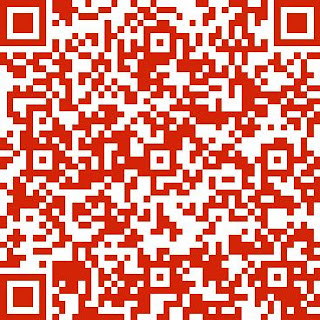
QR code

Data Matrix code

Both of the above contain pixels, arranged is a specific order. Usually, these codes are printed in black, but using any uniform colour seems to be fine.

Though the concept is interesting, they are rather boring and repetitive visually. Microsoft came to rescue a few years ago and developed its own "Microsoft tag", using an encoding method that allows the use of multiple colours, shapes and even your own artwork in the background. Below are a few examples.

Default colour Microsoft tag

Custom b & w Microsoft tag with dot colours changed
Custom colour Microsoft tag with dot colours changed

The Microsoft tags seem to offer more graphical options. In addition, it incorporates "safe space" border that acts as a matting for the visual design.

For all of the tags shown, the encoded text that would be revealed through their smart device software is as follows:

-----

a flurry
of activity
captured now
within the muted
confines of an urn

desean 2010
desean@telus.net
http://kimono-designs.com/desean

-----

The text I encoded is basically a tanka poem that accompanies the kimono design shown in the image. I also added my name, date whenI wrote the poem as well as my contact information.

It would be interesting to create a book, a T-shirt or a print with large tag images. The viewer could simply scan the tag with a smartphone and find more information (at a gallery, for instance), or read an artist or author's CV or biography.

Though I have not yet tested any of the QR or Microsoft Tags in this post (still waiting for my iPhone 4S), you can download the Tag app to scan the Microsoft Tags:


Cyanovoids

Twenty years ago, I began my first colour collages involving photos or digitized images, 3d objects and digital painting. Browsing through my portfolio, I noticed Cyanovoids, one of my first (rather low res, by today's standards) attempts at photo montage. Bleu, a friend, kindly posed for me (thus the title, 'cyan ovoids'). And guess what? Its theme also seems to evoke rising, becoming visible, appearing, rebirth, origin, source... I guess the quest for ortus has been with me for a while...


I notice that I had tried to give the outer edges of the image a pixelated effect, trying to imagine a photo captured through frosted glass or framed through an alien spaceship's camera lens.

Fabric skins

Several years ago, in preparation for one of my 'skins' installations, I drew a concept sketch for a fabric skin, then had it fabricated by a seamstress. The womb-like skin membrane would allow someone to wear it and interact with it, going through various poses that evoked a struggle for birth, freedom and escape; the person could eventually exit the skin through a partial slit in the seam, shedding a now lifeless skin. This also evokes the notion of metamorphosis, not unlike the butterfly emerging from the chrysalis, or the chick from the egg.


A friend tried out the embryonic sac.


I'll be using the skin again in a future photo shoot with James, exploring the Ortus theme.